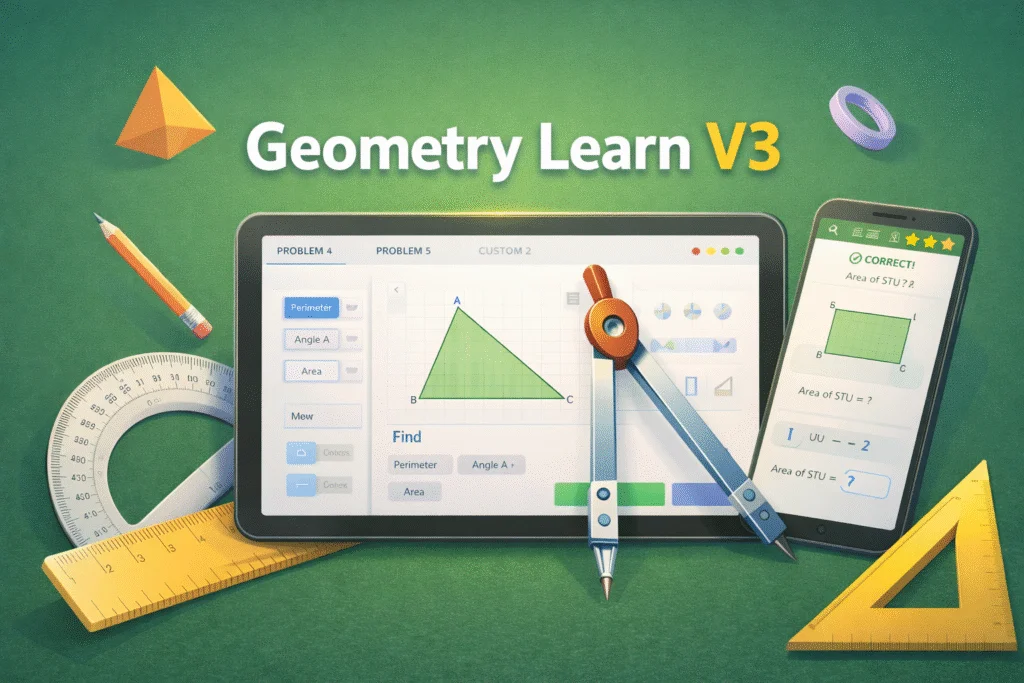
Geometry often feels like a maze of angles, shapes, theorems, and diagrams that refuse to make sense. Many students remember staring at triangles and circles wondering why everything suddenly look confusing. Geometry Learn V3 changes the way learners approach spatial reasoning and mathematical visualization. Instead of memorizing formulas blindly, we begin to see patterns, relationships, and logic behind every shape.
The strategies below focus on practical techniques that help students grasp geometry faster and retain it longer. Some of these methods may feel surprisingly simple, but when practiced consistently they reshape the way the brain process mathematical structures.
Why Geometry Learn V3 Makes Learning Geometry Easier

Geometry Learn V3 centers around visual reasoning and structured practice. Traditional methods often rely heavily on memorization, but geometry thrives when learners see connections between shapes and measurements.
When we actively draw, rotate, and analyze shapes, the brain forms stronger memory pathways. Researchers in spatial cognition have shown that visual engagement improves mathematical understanding significantly. Readers interested in the cognitive side of geometry may explore studies published by the National Council of Teachers of Mathematics
https://www.nctm.org
Geometry Learn V3 also focuses on problem recognition. Once a learner recognize a pattern, solving problems becomes faster. The goal is not solving one question correctly. The goal is recognizing twenty similar questions instantly.
Sometimes students say geometry is difficult. Truth is, geometry only appear complicated when the relationships between angles and shapes isnt clear yet.
Trick 1: Train the Eye to Recognize Shape Patterns

Visual Pattern Recognition in Geometry
One of the strongest advantages of Geometry Learn V3 lies in pattern recognition. Many geometry problems repeat the same structure with small variations.
Triangles inside circles, parallel lines crossing transversals, or symmetrical shapes show up again and again. When we train our eye to spot them quickly, solving problems become much easier.
A helpful practice technique is to redraw the diagram several times. Draw it messy first, then redraw carefully. By the third time something clicks in the brain and suddenly the angles feel more predictable.
Interactive geometry tools such as GeoGebra allow learners to experiment with shapes dynamically:
https://www.geogebra.org
Moving points and watching angles change teaches geometry faster than static textbook diagrams.
Sometimes students forget one simple rule. Geometry is visual mathematics. If we dont draw enough, the ideas never fully settle in the mind.
Trick 2: Build a Personal Geometry Formula Map
Connecting Theorems Instead of Memorizing Them
Many learners attempt to memorize dozens of geometry formulas separately. This approach rarely works well because the formulas feel disconnected.
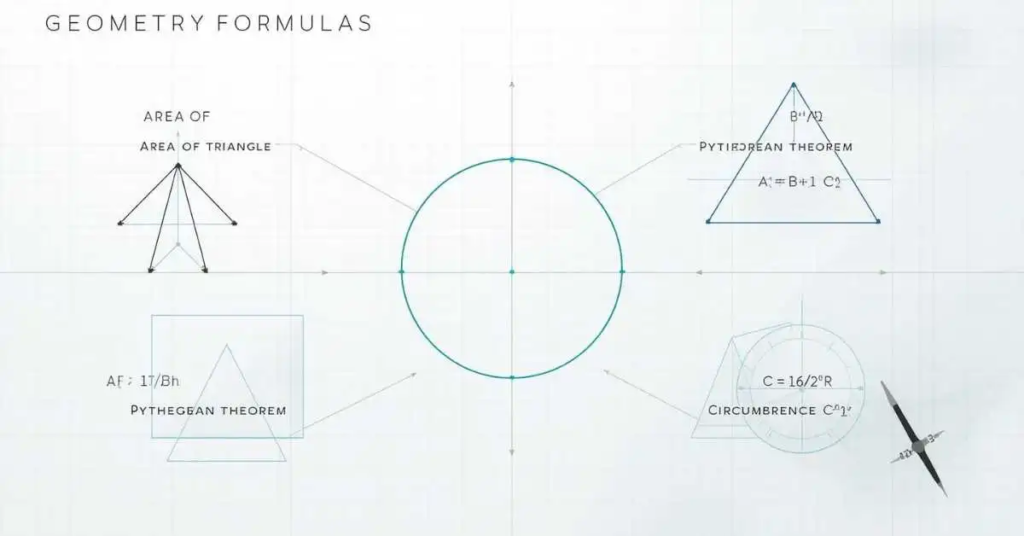
Geometry Learn V3 recommends creating a visual formula map. Instead of a list, we build a diagram linking formulas together.
For example:
- Triangle angle sum connects with exterior angle theorem
- Similar triangles connect with proportional sides
- Circle theorems connect with arcs and chords
When drawn as a network, these relationships start making sense. Suddenly we realize many formulas actually come from the same geometric principle.
Sometimes students think they forgot everything. But often the brain just needs the correct connection to remember it again.
Trick 3: Use Real World Objects to Understand Shapes
Practical Geometry Observation
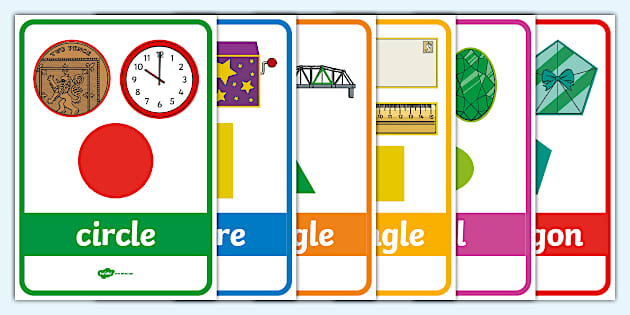
Geometry becomes clearer when we see it in everyday environments. Architecture, roads, bridges, windows, even sports fields contain geometric structures.
A learner practicing Geometry Learn V3 might examine:
- Triangle trusses in bridges
- Circular symmetry in stadium design
- Polygon patterns in floor tiles
Exploring geometry in architecture is particularly helpful. The American Institute of Architects provides useful educational material on structural geometry:
https://www.aia.org
When students connect math with real objects, the subject feels alive. A textbook diagram suddenly resembles something we saw yesterday.
Sometimes we overlook these patterns everyday without noticing them. Once the eye become trained, shapes begin appearing everywhere.
Trick 4: Solve Problems Backwards
Reverse Reasoning Technique
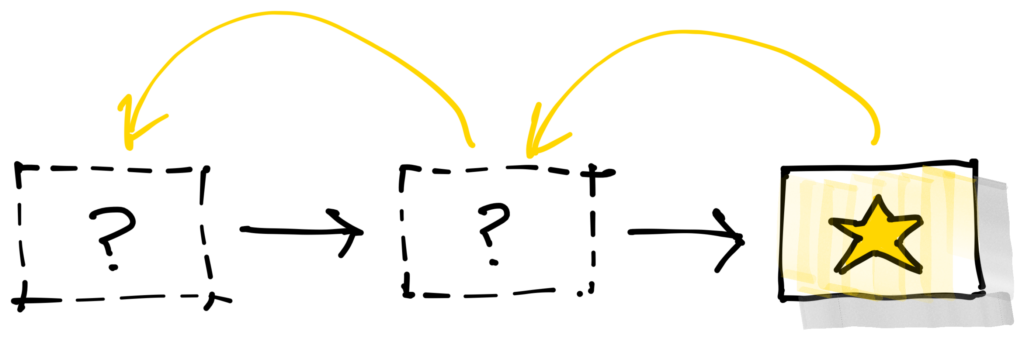
A powerful Geometry Learn V3 strategy is reverse solving.
Instead of asking “what is the angle?” we begin by asking what conditions must exist for that angle to appear.
This method helps when problems feel overwhelming. By analyzing the final goal first, we narrow down the possible theorems needed.
For example:
If two triangles must be congruent, then one of the following must exist:
- SSS condition
- SAS condition
- ASA condition
Working backwards allows us to search the diagram for those relationships.
Sometimes students stare at a problem for ten minutes. Then someone flips the reasoning direction and the answer appear almost instantly.
It isnt magic. Its simply changing the path of thinking.
Trick 5: Master Triangle Relationships First
The Core of Geometry Learn V3
Triangles are the foundation of almost every geometry topic. Circles, polygons, coordinate geometry all rely heavily on triangle relationships.
If triangle properties are weak, many advanced problems become confusing.
Focus strongly on:
- Similar triangles
- Congruent triangles
- Pythagorean relationships
- Angle bisectors and medians
Practice drawing triangles in different orientations. Rotate them. Stretch them. Flip them.
Even if the triangle look completely different, the relationships still exist. That realization builds strong confidence.
Students sometimes panic when shapes rotate. But geometry doesnt care about orientation, only relationships.
Educational resources from Khan Academy geometry courses provide excellent exercises for this:
https://www.khanacademy.org/math/geometry
Trick 6: Practice Diagram Reconstruction
Drawing From Memory
A unique approach used in Geometry Learn V3 involves diagram reconstruction.
Instead of solving a problem once, close the book and redraw the entire diagram from memory. Then solve it again.
This technique forces deeper visualization.
When the brain reconstructs shapes without reference, spatial understanding grows dramatically. It may feel difficult first time, but after few attempts the mind begin organizing geometry information much faster.
Students who skip this step often struggle remembering diagrams during exams.
And exam pressure makes memory even more shaky sometimes.
Trick 7: Explain Geometry Out Loud
Teaching as a Learning Method
One of the fastest ways to learn geometry is explaining it to someone else. Teaching forces the brain to organize knowledge logically.
Even explaining to an empty room works surprisingly well.
Try describing a theorem step by step:
Why two triangles are congruent
Why parallel lines create equal alternate angles
Why circle tangents form right angles
While explaining, gaps in understanding suddenly appear. Those gaps show exactly what needs more practice.
Many students believe they understand a concept until they try explaining it. Then words get stuck, and confusion shows up.
That moment is actually progress, not failure.
Consistency Matters More Than Difficulty
Geometry Learn V3 works best with consistent practice. Short daily sessions produce stronger results than occasional long study hours.
Even fifteen minutes of diagram drawing each day trains spatial reasoning gradually. Over weeks the improvement becomes noticeable.
Students often expect sudden breakthroughs. Geometry rarely behave that way. It grows slowly, quietly, until one day complex problems feel almost familiar.
There will be mistakes, messy diagrams, and incorrect assumptions. Thats normal. Every mathematician has filled pages with wrong sketches before finding the correct path.
And sometimes the wrong attempts teach more than the correct ones.
Final Thoughts
Geometry Learn V3 offers a structured path for mastering spatial mathematics through visualization, connections, and active reasoning. By recognizing patterns, mapping formulas, exploring real world shapes, and practicing reverse reasoning, learners begin seeing geometry differently.
What once felt like random theorems start forming a logical system. Shapes communicate relationships. Angles reveal hidden structure.
The process might feel confusing at first, and mistakes will happen plenty times. But persistence builds clarity. With enough practice, geometry stops being a puzzle and starts feeling like a language we can finally read.